How an Arborist Can Help Prepare Your Trees for Peak Storm Season in the Bay Area

Pineda's Tree Service • November 27, 2026
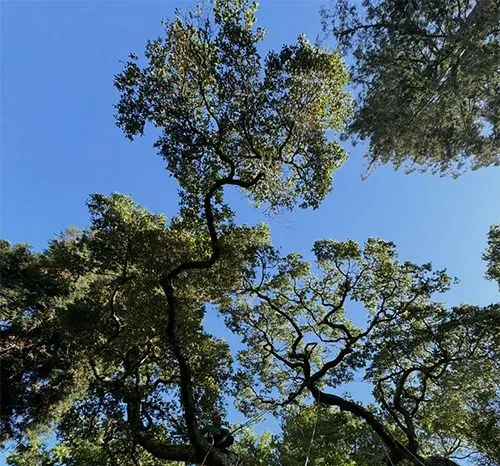
Looking up through leafy tree canopies against a clear blue sky.

Storm season in the Bay Area can bring powerful winds, heavy rainfall, and saturated soil that place considerable stress on trees. Without proper preparation, weakened trees and unstable branches may become serious hazards. Working with an experienced arborist before severe weather arrives can help reduce these risks and keep your landscape healthier. At Pineda's Tree Service, our local arborists can help prepare your trees for storm season. Here’s a look at how.


Identify Potentially Hazardous Trees

One of the most important steps in storm preparation is identifying trees that may be vulnerable to strong winds or heavy rain. An arborist can inspect your property for warning signs such as trunk cracks, root damage, internal decay, significant leaning, and dead branches. These conditions can compromise a tree's structural stability and increase the likelihood of failure during severe weather. A professional assessment helps determine which trees need attention before storm season reaches its peak.


Remove Dead and Weakened Branches

Dead, diseased, and structurally compromised branches are particularly vulnerable during storms. Strong winds can break these limbs loose, creating hazards for people, vehicles, roofs, and landscaping features. Professional pruning removes dangerous branches while helping preserve the tree's overall health and natural structure. An arborist can also identify overcrowded or poorly attached limbs that may need corrective pruning to reduce potential storm damage.


Evaluate Root Systems and Soil Conditions

Heavy rainfall can saturate Bay Area soils, potentially reducing the stability of trees with compromised root systems. An arborist can examine visible roots, the area surrounding the trunk, and signs of soil movement or root deterioration. Trees growing in compacted, poorly drained, or disturbed soil may require additional attention. Identifying these problems early can help determine whether corrective measures or removal are necessary.


Recommend Tree Removal When Necessary

Unfortunately, some trees are too damaged, diseased, or structurally unstable to remain safely on a property. An arborist can evaluate these situations and determine whether removal is the most responsible option. Addressing hazardous trees before severe weather arrives can help prevent failures and property damage.


ISA-Certified Arborist in San Pablo, CA

For an experienced arborist in San Pablo and the surrounding San Francisco Bay Area, contact Pineda’s Tree Service at 510-488-5590. Feel free to give us a call to ask for a tree care estimate in greater San Pablo, CA!

By Pineda’s Tree Service • July 29, 2026
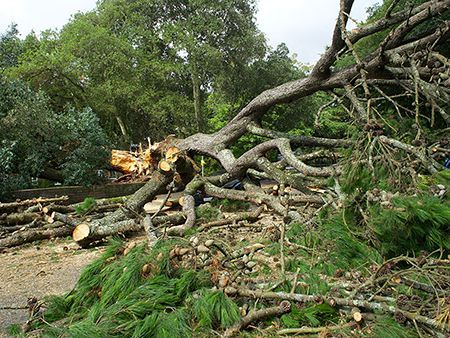
Mature trees add shade, beauty, and value to a property, but a structurally unstable tree can become a serious hazard. Damage, disease, decay, and changing soil conditions may weaken a tree until heavy wind or rain causes branches or the entire tree to fail. Pineda’s Tree Service provides professional tree evaluations and tree removal in San Pablo and throughout the San Francisco Bay Area. Here are several warning signs that a tree may need to be removed for safety. The Tree Is Leaning Suddenly Some trees naturally grow at an angle, but a new or worsening lean can indicate root failure or structural instability. Raised soil, exposed roots, or cracking around the base may signal that the tree is beginning to shift. A leaning tree near a home, road, walkway, or neighboring property should be evaluated promptly. Large Branches Are Dead or Falling Dead limbs become brittle and may fall without warning. Multiple dead branches, hanging limbs, or sections of canopy that no longer produce leaves can indicate serious decline. While selective pruning may solve an isolated problem, extensive deadwood could mean the entire tree is unsafe. The Trunk Is Cracked or Hollow Deep cracks, cavities, peeling bark, and hollow areas may weaken the trunk’s ability to support the canopy. Mushrooms or other fungal growth near the trunk or roots can also indicate internal decay. Because much of the damage may be hidden, an arborist assessment is often necessary. Roots Are Damaged or Decaying Construction, excavation, soil compaction, disease, and excessive moisture can damage a tree’s root system. Warning signs may include thinning foliage, dead branches, poor growth, or movement at the base during windy weather. A tree with severe root damage may lose stability even when the trunk appears healthy. The Tree Has Severe Storm Damage Strong winds and heavy rain can split trunks, break major limbs, and leave trees partially uprooted. Some storm-damaged trees can be preserved through pruning, cabling, or bracing, but others require removal to prevent additional failure. Do not wait for a dangerous tree to fall. Pineda’s Tree Service offers hazardous tree assessments, technical tree removal, and 24-hour emergency tree service in San Pablo, Richmond, El Cerrito, Oakland, and nearby Bay Area communities. Call  510-488-5590  to schedule an evaluation or request a quote for the cost of tree removal in San Pablo or throughout the region .